
Filters Showing 1– 12 of 12 movies
A young woman takes seasonal work on a family farm only to discover there is something very, very wrong. Now she must fight for her survival.
- 1.5 / 5.0
After suffering a heart attack, retired General José Mendieta (Damián Alcázar) is haunted by his dark past as an officer in Operation Condor, the CIA-backed campaign of political repression in Latin America that was responsible for executions, torture, and imprisonments in the 1970’s. It is estimated that over 400,000 people were imprisoned and 30,000 forcibly disappeared as a result of these government actions.
In a letter to his son Pablo (Bernardo Peña), Mendieta confesses the role he played in the abduction, persecution, and execution of countless men and women during his posting to Chile. Journalist Marco (Carlotto Cotta) and his pregnant wife Luciá (Carla Ortiz) are among those who were arrested, along with their activist friend Antonio (Tomás Fonzi) and revolutionary Andrea (Ana Calentano). They suffer terribly under Mendieta and his cohort Sanera (Rafael Ferro), which leads to a cascade of betrayals, secrets, and stolen lives that spans generations.
- 2.67 / 5.0
The film is both a love song and a eulogy to the directors birthplace of Liverpool. It is also a response to memory, reflection and the experience of losing a sense of place as the skyline changes and time takes it toll.
- 4 / 5.0
It’s 1982, and Taeko (voiced by Daisy Ridley) is 27 years old, unmarried, and has lived her whole life in Tokyo. She decides to visit her family in the countryside, and as the train travels through the night, memories flood back of her younger years: the first immature stirrings of romance, the onset of puberty, and the frustrations of math and boys. At the station she is met by young farmer Toshio (voiced by Dev Patel), and the encounters with him begin to reconnect her to forgotten longings. In lyrical switches between the present and the past, Taeko contemplates the arc of her life, and wonders if she has been true to the dreams of her childhood self.
- 3.79 / 5.0

Our Last Tango tells the life and love story of Argentina’s most famous tango dancers, Maria Nieves Rego and Juan Carlos Copes, who met as teenagers and danced together for nearly fifty years until a painful separation tore them apart. Relaying their story to a group of young tango dancers and choreographers from Buenos Aires, their story of love, hatred and passion is transformed into unforgettable tango choreographies.

25 years ago, ethnomusicologist Louis Sarno traveled from New Jersey to the forests of Central Africa to record the music of the Bayaka Pygmies. Falling in love with a Bayaka girl and her forest lifestyle, he decided to stay.
- 3.8 / 5.0
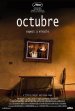
Clemente, a moneylender of few words, is a new hope for Sofía, his single neighbor, devoted to the October worship of Our Lord of the Miracles. They're brought together over a new-born baby, fruit of Clemente's relationship with a prostitute who's nowhere to be found.
- 5 / 5.0

With white Jewish lesbians for parents and two adopted brothers - one mixed-race and one Korean-Brooklyn teen Avery grew up in a unique and loving household. But when her curiosity about her African-American roots grows, she decides to contact her birth mother.
- 3 / 5.0
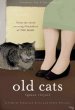
Isidora, an old woman, discovers that her mind is quickly deteriorating. At an apparently relaxed dinner table, she will desperately try to hide her state from her daughter, a demanding woman who awaits any sign of senility in order to take away everything she has.
- 4 / 5.0

Murielle and Mounir love each other passionately. Ever since he was a boy, the young man has been living with Doctor Pinget who provides him with a comfortable life. When Mounir and Murielle decide to marry and have children, the couple's dependence on the doctor becomes excessive. Murielle finds herself caught up in an unhealthy emotional climate that insidiously leads the family towards a tragic outcome.
- 4.25 / 5.0

A family lives in the Mexican countryside raising fighting bulls. Esther is in charge of running the ranch, while her husband Juan, a world-renowned poet, raises and selects the beasts. Although in an open marriage, their relationship begins to crumble when Esther falls in love with an American horsebreaker and Juan is unable to control his jealousy.
- 1 / 5.0

Out of the Clear Blue Sky tells the riveting, behind-the-scenes story of Cantor Fitzgerald. It’s a story of disaster without precedent. What do you when everything – and almost everyone – is gone?
On September 10, 2001, financial firm Cantor Fitzgerald was headquartered on the top 5 floors of the World Trade Center. With offices soaring 100 stories above downtown Manhattan, the Wall Street powerhouse was unknown to the public until tragedy struck. On September 11, 2001, 658 of their employees were missing – presumed dead – in the nation’s worst terrorist attacks. Overnight, Cantor became world famous for the worst of all possible reasons. One of the few who survived was their notorious CEO Howard Lutnick, who had been taking his son to his first day of kindergarten when the planes hit. On September 13th, Lutnick’s emotionally raw, tear-filled interviews transfixed the nation. His distraught television appearances struck a deep personal chord with millions of traumatized Americans reeling and shell-shocked by the unprecedented attacks. But, within a week, in a move that was to become very controversial, Lutnick stopped the paychecks of his missing employees. It was an act that has been praised by some – as a necessary decision to save the company to help the widows of his fallen friends — but severely lambasted by more — as a self-serving, heartless betrayal by a man well known for his ruthlessness. Lutnick’s prior reputation as cut-throat – even by Wall Street standards – preceded him.
The media turned on him and Lutnick went from sympathetic face-of-the-tragedy to vilified pariah over night. Then he completely withdrew from the public eye. Though Cantor suffered almost twice the casualties of the FDNY, their story soon disappeared.
Directed by a September 11th family member, “Out of the Clear Blue” tells twin stories – not only the saga of the ravaged business and surviving employees, but also an insider’s take on the unusual community of families that formed in the aftermath. Cantor’s loss was not only the largest loss by a single entity, it also created the largest single group of mourners, over 6000 people bound by their horrific common experience. This was tragedy writ large. People too young to die, all knowing each other, lost on one day. There wasn’t one memorial to attend; there were 10 a day for over two months, forcing people to choose whose funeral to go to. It wasn’t one dead per family; it was doubles or even triple losses in a family. This wasn’t a private loss; this was as public as could be, with television images played and re-played endlessly and inescapably. A true stranger-than-fiction account, from the jittery and stunned first days — a time unlike any other in American memory — then unfolding over months and years, the film captures what it’s like being caught in the crosshairs of history.